Almost none of you know Charlie DeJong. I worked with Charlie when we were both at Microsoft. He had an interest in the environment and growing up in Wenatchee in Eastern Washington he grew more interested in data centers as they were being built in his hometown area. Charlie and I took a drive out to Eastern Washington 5 years ago to look at some data centers to prepare him for some job interviews. Unfortunately, Charlie did not get job so he is an unknown in the data center industry.
Just now I heard through a Facebook post that Charlie past away this weekend.
Today, God reached from heaven to carry the soul of our dear Charlie to be with him in his Kingdom. Those that knew Charlie witnessed a man that truly loved his family and friends and most of all God. Charlie showed me laughter, sometimes tears, but I always knew that his love for God and his beautiful family were paramount...it radiated from him! Charlie DeJong, I love you and will miss you, and I know you will always be with us.
Charlie did get to spend the last 4 years working on something that he can be proud of.
If you interact with media writers at some point you'll get the comment "I don't have time now, I have a deadline." I don't think I've ever told someone I have a deadline. What is a deadline?
Here is a post on what deadlines mean to journalist.
I wonder how many journalist have used this line.
When under the gun, journalists put deadline before anything else in their lives, including friends, family and yes, even coital. There’s a reason why spouses of journalists are familiar with the saying, “Not tonight dear, I’m on deadline.”
I have gone a week or more just not writing on this blog, taking a break. Sometimes I'l go a day or two with no posts, then have a riff of 5 in an hour.
On the other hand the main thing in writing a blog is to be regular with what you write. Daily, weekly, etc.
I think after 26 years of corporate life, I enjoy the freedom to set my own pace.
Google pushed up the videos for "How Green is Internet?" yesterday.
Driving the industry forward
Through industry collaboration, we aim to create a more sustainable technology sector and build products and services that benefit the environment. For example, we hosted events in 2009 and 2011 where we discussed with industry peers how we can improve on data center efficiency. In June 2013, we hosted the “How green is the Internet?” summit.
The videos allow you to see the presentations. The slides will be up soon as well.
The news covered the event with the following posts I pointed to. So what is next? Some perspective and analysis.
I got a chance to sit in a media briefing with Urs Hoelzle that supported the media posts. Sitting next to Urs we chatted before anyone else came in and had a good time following up on some discussions.
There were bunch of side conversations I had with wholesales data center operators, data center users, technology companies, various support staff many who are friends I hadn't seen for a while and some I saw only 24 hrs ago at 7x24 Exchange in Boca. Jonathan Koomey and I discussed a paper that I will interview him for. Gary Cook will also be interviewed for the same paper and luckily I was able to get the three of us to chat about the ideas. I thought Gary and Jonathan knew each other which they did, but they hadn't actually met in person.
The RAW data is there - videos and presentations. Media reports were made as well. The vast majority of people will base their opinion of the event on what the media writes. One excellent insight is George Orwell's comment on writing that I posted. Knowing someone's motives allows you to understand their perspective
I give all this background information because I do not think one can assess a writer's motives without knowing something of his early development.
I didn't get a chance to get the early development background of the media, but sitting in a conf room for an hour watching the questions asked, how they reacted gives a perspective to read their writing. Can you imagine if when you read a media post you were able to watch the video of the interview side-by-side to watch the interview and read their writing. When I was at the IBM Impact conference I got a more extended view of the media process.
Some of the things I've figured out I have written down to post, but after reading them, the ideas are esotreric or controversial which means it is for a much narrower audience.
One of the best things about attending Google's Energy Summit is I have now a deeper understanding of how things work. The process that people can't see in the challenge of communicating green initiatives. Just because something is invisible doesn't mean it is not important.
Yet, sometimes things need to be invisible in order to allow people to understand and not get distracted. Here is a classic saying for Typography.
Good typography is invisible. According to Gerard Unger: ” It is almost impossible to look and read at the same time: they are different actions ” Therefore, graphic designers, make your typography invisible so the words and messages can communicate as intended.
Bad Typography is Everywhere / Good Typography is Invisible
I attended as media/press the 3rd Google Energy Summit. I had been to the 1st, and was briefed on the presentations for the 2nd. The third didn't focus on data centers as much and more asking questions and presenting data on the environmental impact of data centers and internet technologies. Urs Hoelzle has been the executive sponsor for each one of these events. Al Gore and Eric Schmidt for the first time presented their perspectives.
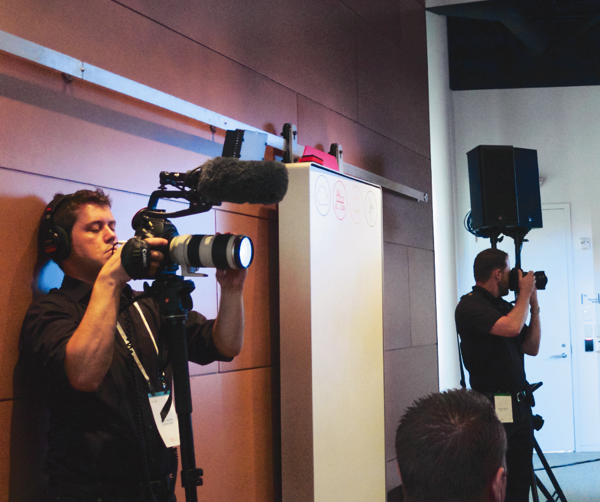
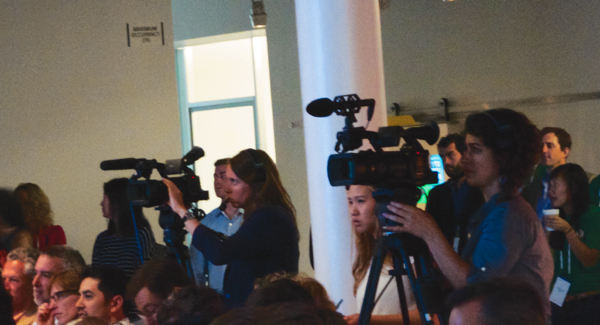
On purpose I choose not to write, tweet, during the summit. There were a bunch of photographers and videographers there so I know the images and video are going to come.
It's a lot of hard work to record the content, let alone listen to what people are saying.
Here are the list of news articles on the Google event that Google news shows.
How green is the Internet? Al Gore, Eric Schmidt and other experts packed a room at Google headquarters Thursday to explore the Internet's environmental impacts. With a crowd of about 100 people, it was the third event Google has hosted on this topic since ...
But all of this research is so new, and these issues are so complex, that answering that question — is the internet green or not? — is a very difficult one. After the day long Google event called How green is the internet? I have a lot more questions than answers ...
Server and data center under-utilization is one of the primary sources of waste and inefficiency in computing, argued Hoelzle, who served as the master of ceremonies at the “How Green is the Internet?” symposium that took place at Google headquarters in ...
Google is hosting a summit on its corporate campus on Thursday exploring the question: How green is the Internet? The main speakers include former Vice President Al Gore, Google Chairman Eric Schmidt and Urs Hölzle, the Mountain View Internet giant's ...
That was the bottom line in a wide-ranging discussion Thursday at “How Green is the Internet,” a conference convened by Google to brainstorm ways to reduce the impact of Internet technology on the emission of green house gases. Data centers got their ...
At yesterday's “How Green is the Internet?” conference, Google Chairman Eric Schmidt shared anecdotes about the benefits of Internet services in the emerging world, citing his experiences in travels to Pakistan, southern Sudan and China. (Photo: Rich Miller).
Speaking at Google's "How Green Is the Internet? Summit" at the company's Mountain View headquarters on Thursday, Gore reiterated his belief that global warming is real, and that its effects are already upon us. Gore's presentation at the gathering, which is ...
The digital revolution and the explosion of data are powerful tools that can help solve the climate crisis, said Vice President Al Gore at Google's 'How Green is the Internet?' on Thursday. In Gore's talk he applauded the leadership roles that tech companies like ...
A friend asked me a month or so what is the next thing Amazon Web Services is going to do. I spent a bit of time researching ideas, then it hit me AWS will eventually be in major markets within the countries borders.
A couple of months ago I was chatting with a journalist from Spain and we discussed the cloud, hosting, and AWS. Here is a post that ail give you an idea of the protectionist practices in Spain.
Hedge funds and private equity groups have raised concerns about the risk of creeping protectionism in proposals made by Spanish diplomats to re-write European Union legislation to regulate their industries for the first time.
He believed that a threat to IT jobs by moving to a public cloud outside the country would be met with protectionist enthusiasm to keep jobs in the high paying IT industry.
The cloud is a disruptive force that will challenge current IT operations, bringing automated standardized environments that require a small fraction of IT hardware and staff. Requiring nationalized citizens to operate the IT environment is an easy impediment for moving to a cloud in another country in the USA or other places that are the cloud hubs. This still leaves opportunities for the hosting companies in the country to provide IT services within the borders.
Now imagine this. AWS gets 200kW of colocation space. Ships in 4 cabinets of optimized cloud gear with room for another 16. Ships the bits uninstalled on storage. Has nationalized citizens run scripts that create the environment. And launch a country specific AWS instance. Local sales force drive sales and gets feedback on what needs to be added to remove barriers for companies to move into AWS.
What in this seems like it hard for AWS to do?
AWS's price point would be substantially lower than the local hosting company. It is kind of like the infamous Wal-mart effect for retailers unable to compete with the low prices and selection. Amazon.com can apply the same to hosted IT services in a country.
An example of markets that AWS mini-me could go are the locations that have edge locations.
EU (Ireland) Region
EC2 Availability Zones: 3 Launched 2007
AWS Edge Locations
Amsterdam, The Netherlands (2)
Dublin, Ireland
Frankfurt, Germany (2)
London, England (2)
Madrid, Spain
Milan, Italy
Paris, France (2)
Stockholm, Sweden
I have tested this idea on over 2 dozen people and they all say this makes total sense.
And GigaOm's Barb Darrow has shared the idea with the rest of the industry.
Amazon’s GovCloud targets U.S. state, federal and local government workloads. Here’s betting AWS will replicate that model abroad.
With my opinion added.
Right now, I should note that AWS had no comment on this story which is, after all largely speculation. But others who know data center technology and customer requirements agree this game plan makes sense. “There are lots of government workloads out there that require special handling — to protect citizen information etc. There’s a market for this,” said David Ohara, GigaOM Pro analyst and founder of Greenm3.